
Case Study:
Mid-Hudson Food Hub
2014-2018
Scope
Early in its development, Good Food Works learned that gaps in processing and distribution capacity within the regional food supply chain were severely limiting the potential for fresh local farm products to efficiently reach the New York City consumer and institutional markets, especially in low-income communities.
Because the types of infrastructure and services at the middle of the supply chain necessary to address this challenge tend to be difficult to finance and often operate with little to no profit margin, there were few local organizations or businesses with both the ability and motivation to develop such projects.
The Doe Fund appeared well-positioned to enter this space as a large local organization with a history of non-profit social enterprise development that was capable of financing larger projects and whose program leadership had expressed preliminary support for the transitional work and training opportunities such a project could enable.
While Good Food Works was working to develop plans for a last-mile food logistics pilot in New York City, its first foray into food distribution, it was approached by the leadership of a group of Mid-Hudson Valley non-profit food program operators with an opportunity to partner on a collaborative food hub proposal for which they were seeking a mission-aligned lead developer.
The group had been organizing in anticipation of the release of a New York State RFP for the redevelopment of the former Beacon Correctional Facility, a decommissioned minimum security prison with approximately 50,000 square feet of interior building space on a roughly 40 acre property, with the hopes of sharing a combination of classroom space, office space, and on-site farmland to co-locate and expand their programs.
Serendipitously, the RFP, which included $6 million in state funding to assist the awarded developer with renovation and construction costs, was released shortly after Good Food Workshad begun exploring the opportunity. With support from The Doe Fund’s leadership and the hire of a small team of experienced consultants to assist with the project, Good Food Works quickly took the lead on developing a proposal in collaboration with a large group of project partners.
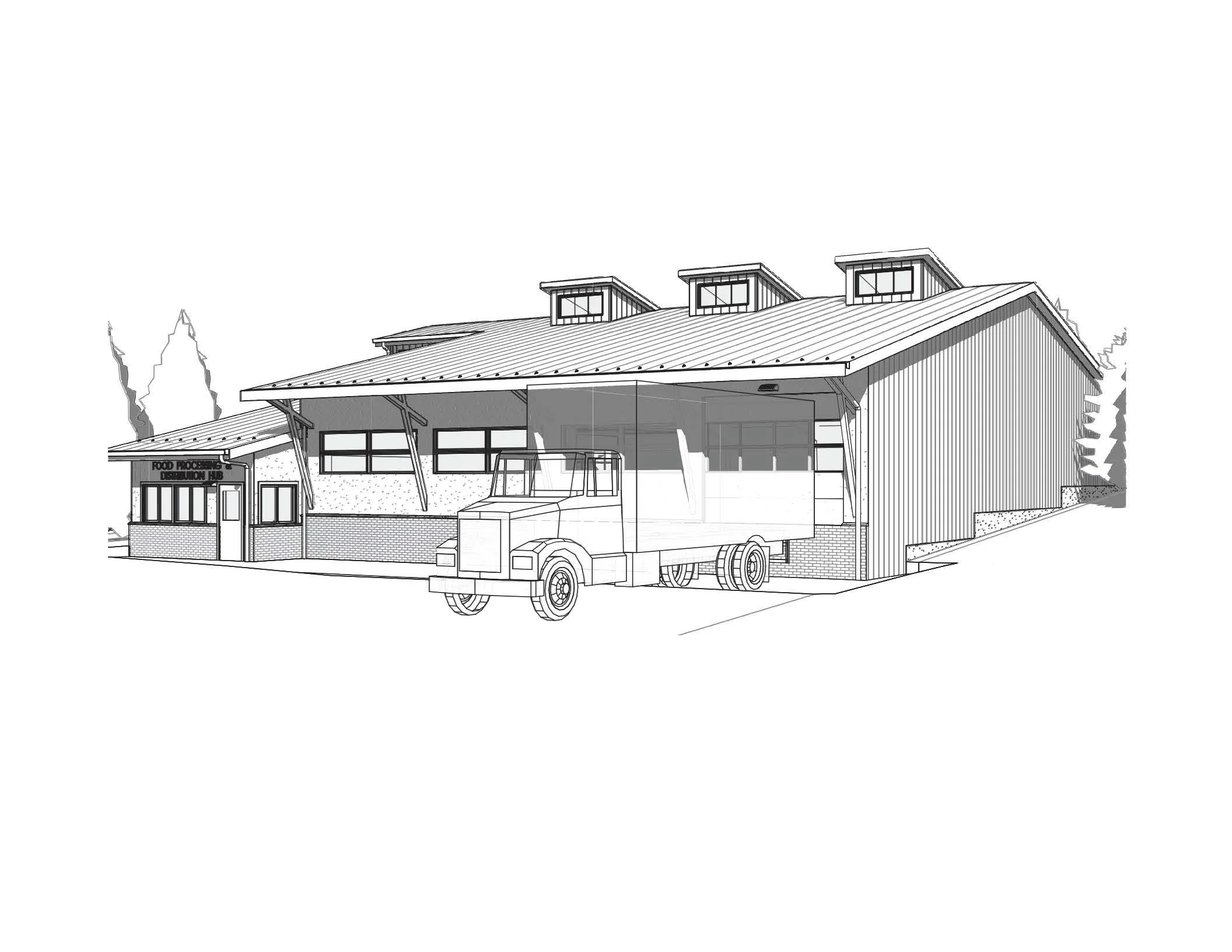
The proposal called for the redevelopment of the former prison into a campus of mission-aligned food programs and enterprises, anchored by a food processing and distribution hub, operated by Good Food Works, that would create training and employment opportunities for unemployed Mid-Hudson Valley residents.
The proposal was well-received by New York State reviewers but local government officials were divided in their support, with some championing the project and others demonstrating opposition to elements of the project plan.
Ultimately, opposition spread among local elected officials, and Good Food Works, which felt it would be inappropriate and ill-advised to proceed with the project without the support of the local community, withdrew its proposal.
Shortly before its withdrawal, Good Food Works had secured a private philanthropic grant to fund an in-depth feasibility assessment of the model included in the proposal and worked with the funder to shift the focus of the study to a smaller stand-alone food processing and distribution hub elsewhere in the Mid-Hudson Valley.
After conducting preliminary analysis of prospective locations and business models, Good Food Works narrowed its geographical focus to Newburgh, NY and its social enterprise focus to midscale fresh-cut fruit and vegetable processing for food service institutions institutions in New York City and the Hudson Valley.
Newburgh stood out as an historically low-income and underemployed community with deep need for job creation and workforce development, which is also strategically located within the local food supply chain due to its access to major transportation routes and, at the time, relatively inexpensive real estate. Fresh-cut processing, focused on the institutional market, appeared to be the most economically-viable and labor-intensive form of local food processing and distribution, and therefore best-aligned with core project goals.
Through sustained conversation with social enterprise thought leaders, regional food institutions, and key local stakeholders, and with the support of a business planning consultant team supported by the planning grant, Good Food Works refined its project plan to directly address priority community needs and reflect key enterprise modeling insights. Through this process, Good Food Works also fostered a breadth of relationships with local stakeholders and potential strategic partners.
Ultimately, however, Good Food Works decided not to pursue the project in the short-term. While the Newburgh community did appear to be supportive of the concept and demonstrated needs directly aligned with project goals and Good Food Works’ capacities, the social enterprise model was determined to carry too much financial risk relative to the quality of jobs and training opportunities it would have created.
Goals
Assess feasibility and desirability of a food hub enterprise
Create training and employment opportunities in fresh food processing, warehouse operations, and commercial driving
Connect regional food service institutions serving low-income communities to a supply of fresh locally-sourced produce
Assessment
Key Strengths
Potential large-scale job creation
Potential large-scale food systems impact
Initial bipartisan municipal and state political support
Key Weaknesses
Lack of sustained political support
Lack of living-wage career pathways for trainees
Capital intensive startup and challenging operating margins
Other Projects

Pop-Up Bakery
(2014-2020)

Farm-to-Table Logistics
(2014-2020)
Urban Agriculture
(2013-2020)
Salad Days
(2020-Present)